Categories
Uncategorized

Oven curing paint and tiller bolts

My tiller bolts are shiny silver aluminium. I’ve always been slightly envious of the brightly coloured ones that Win&Win and some other brands sell.

About the paint

I bought a small bottle of Pebeo Porcelaine 150 paint in Lapis Blue about five years. It’s made for painting things like ceramic plates. I used it to paint the Penrose tiling spring gentians on this mug. It’s not super dishwasher safe but it doesn’t look terrible after years of use.

After painting, the instructions say to let it sit for at least 24 hours before baking at 150 C for 35 minutes. That’s fine for ceramics, but the strength of many aluminium alloys is quite sensitive to heat, and having a tiller bolt deform or fail catastrophically could be quite dangerous.

I couldn’t find any reports about using lower temperatures or shorter times to cure the paint, so I made some test pieces and tried:

150C for 30 minutes

120C for 30 minutes

In each case, I pre heated oven before adding the samples. After cooling, both samples had the same resistance to being scratched with a fingernail and felt smooth and glassy. In comparison, a piece that had sat at room temperature for a week was still easy to scratch with a nail and had a slight plasticky feel when rubbed. As 120C was clearly fine for my purpose is having a hard paint layer, I then tried the same temperature for 10 and 5 minutes. The 10 minute sample felt as hard as the 20 minute sample, but the 5 minute one was noticeably easier to scratch. For the shorter times, I used a thermocouple to keep an eye on the temperature and kept opening the oven door to keep the temperature constant as domestic ovens often aren’t terribly precise.

So, instead of 150C for 35 minutes, I knew 120C for 10 minutes was plenty to harden the paint. Would it be ok for the bolts though?

About the alloy

It’s impossible to tell what aluminium alloy something is just by looking or measuring the density. Looking online, some aluminium bolts are made from the 7075 alloy, which is one of the strongest. It’s also one of the most heat sensitive. In order to give the alloy its strength, it’s generally baked at 120C for 24 hours. This combination of temperature and time lets lots of tiny precipitates grow just enough that their size is the optimum for preventing plastic deformation. However, if it’s heated for longer than that, the strength begins to decrease as the precipitates get too big and too far apart, which is called over ageing. If my bolts were made from this alloy, then I could be pretty confident that if I painted then and then baked the paint as directed, they would be somewhat compromised. The chance of this causing failure are pretty small, but I wouldn’t want to risk that. However, using the shorter curing time at 120C would be fine though as an extra 10 minutes is well within the margin of error on a 24 hour heat treatment.

I contacted Fiberbow, who said my bolts were made from 11S aluminium. This is the same as the 2011 alloy, and is normally heat treated at 160 C for 14 hours. As this is considerably hotter than I need to cure the paint, I can be confident that if the bolts ever fail, it won’t be because of a 10 minute treatment at 120C as it’s insufficient to change the microstructure of the alloy, and hence its strength and resistance to fracture.

Painting

Before painting, I marked exactly where each bolt lined up with riser. I washed everything with dish soap and water, then dipped it in isopropyl alcohol and let it dry. I made sure not to touch anything while painting to avoid transferring grease/dirt from my hands.

I attached each bolt to a cordless drill with a wooden pencil so that I could rotate it while holding the brush in place. This gave a better result as it reduced the visibility of brush strokes. I have each bolt two coats. The paint isn’t fully opaque, which gives the colour a nice depth.

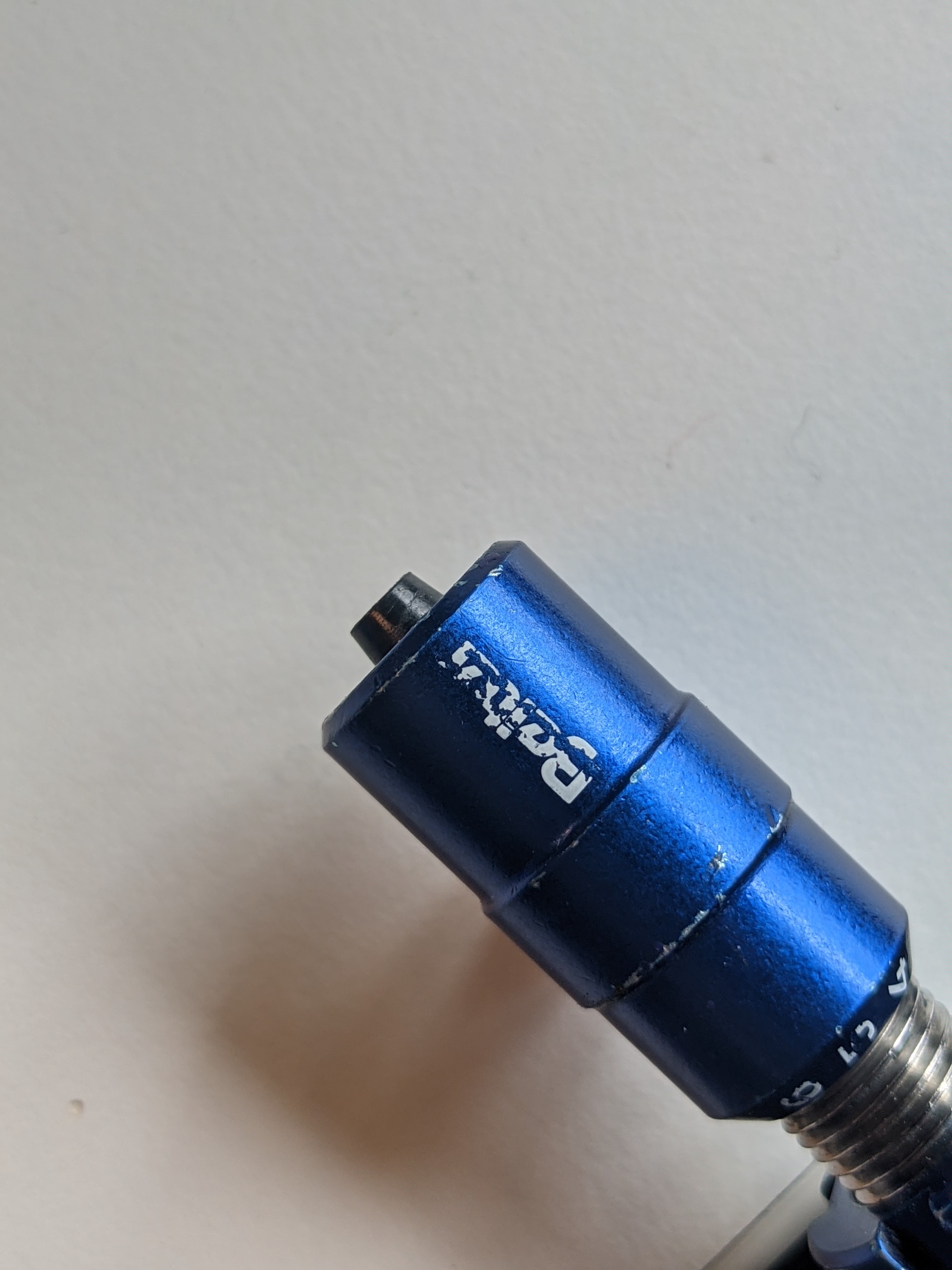
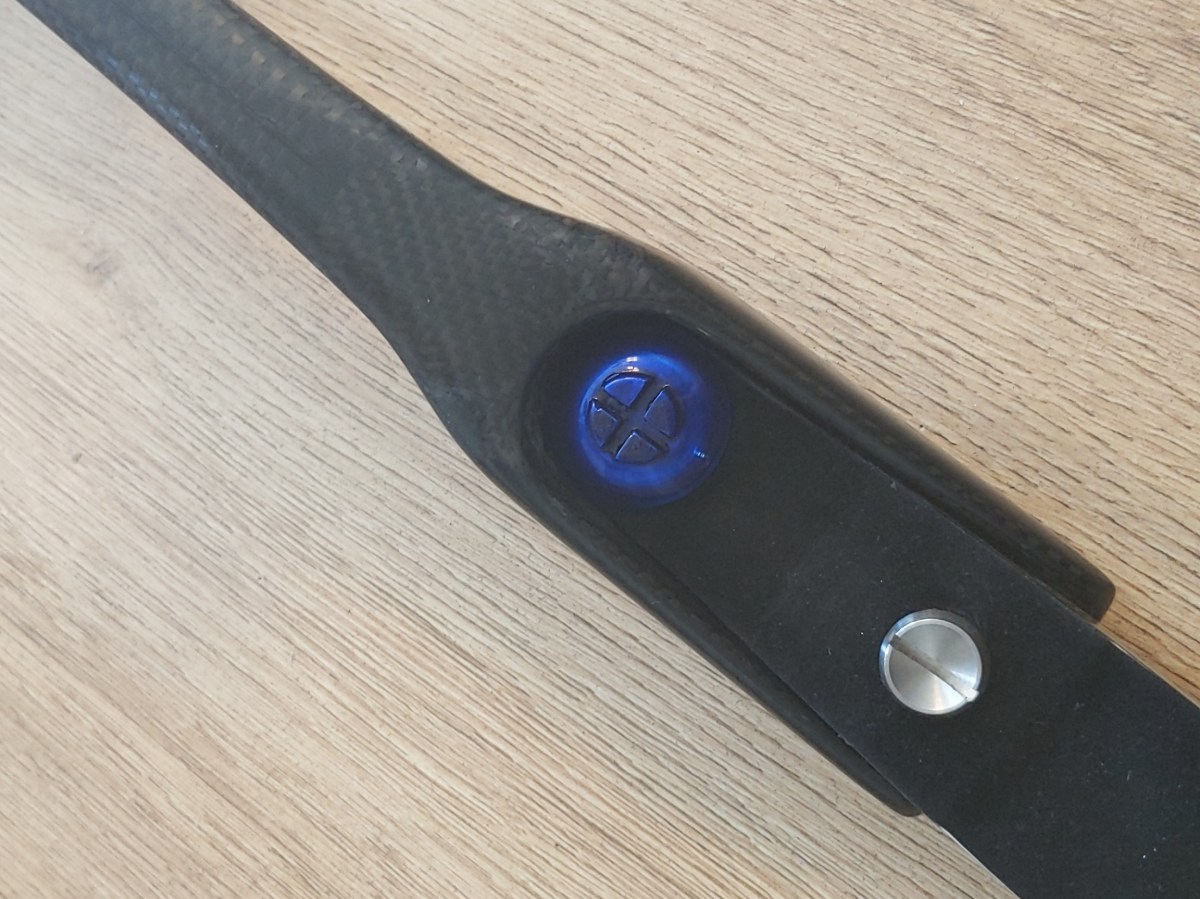
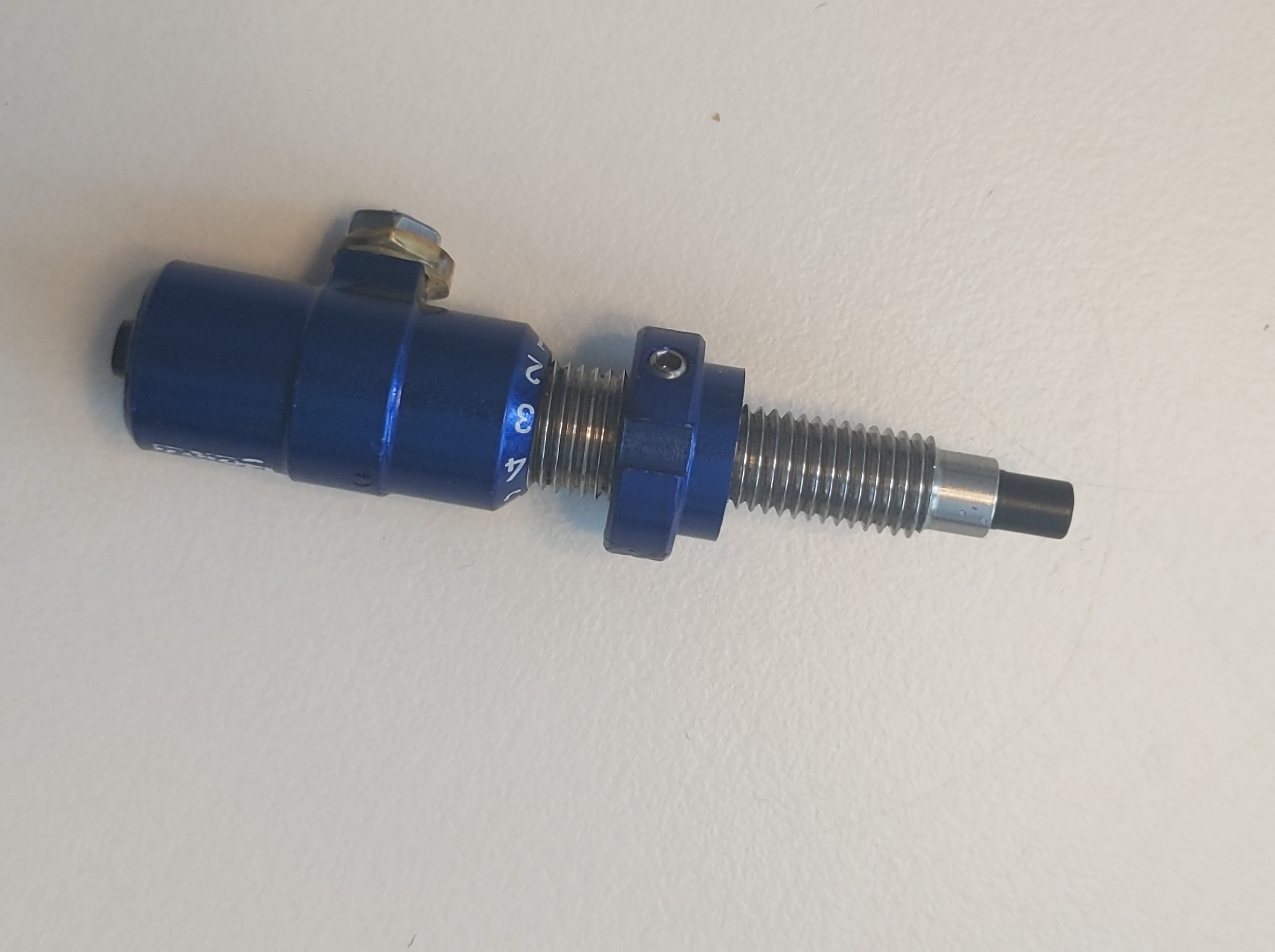
Here are the tiller bolts fresh out of the oven.

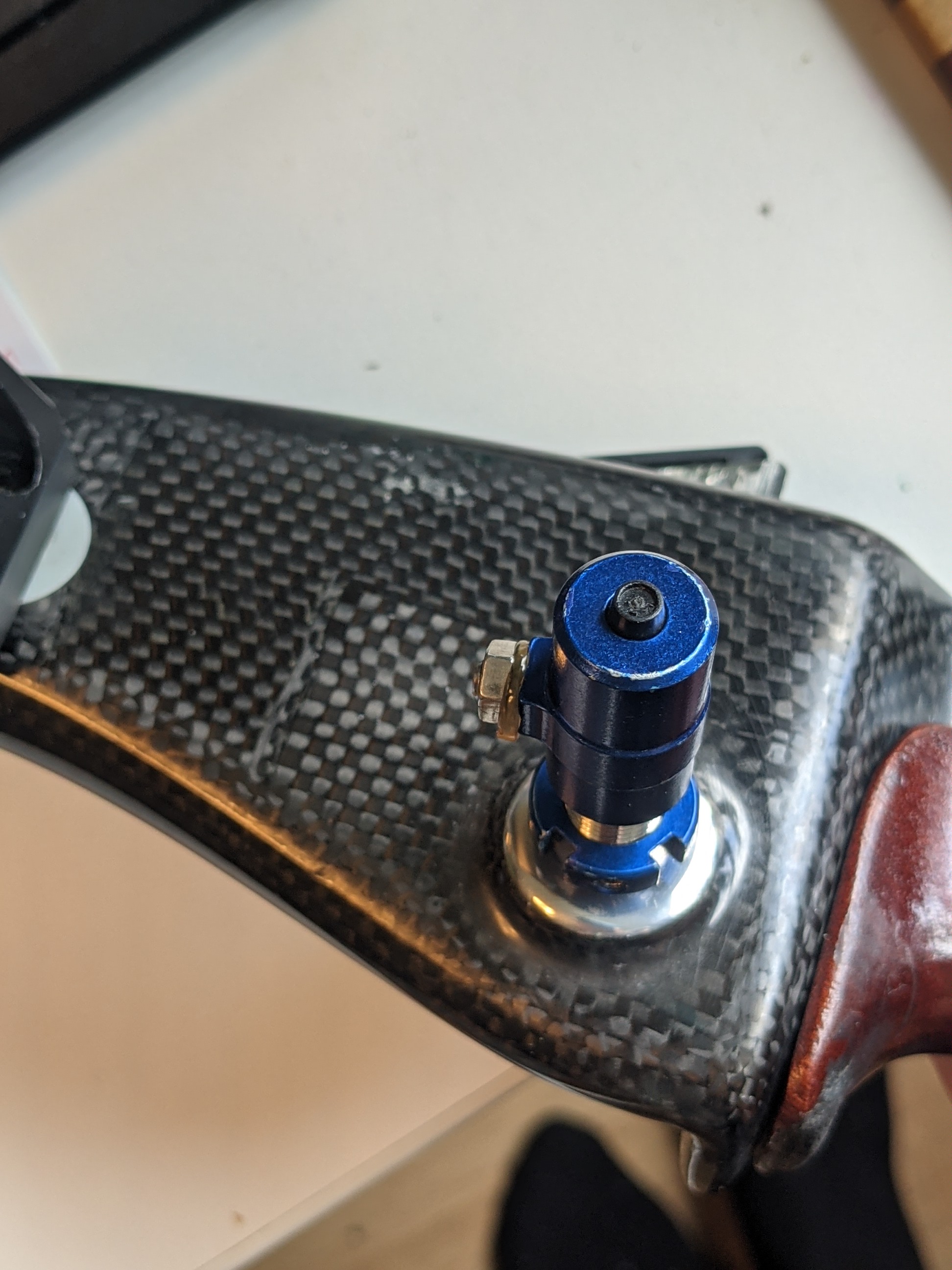
I also did some touch ups on my blue Beiter pressure button, which I’m not terribly careful with. The paint doesn’t hide the scratches completely, but they’re definitely less noticeable from a distance.
Conclusions

Hopefully the hardened paint will last well. I’ll update the post in a few months if it starts to get scratched or come off.

I’m quite satisfied with the look though!
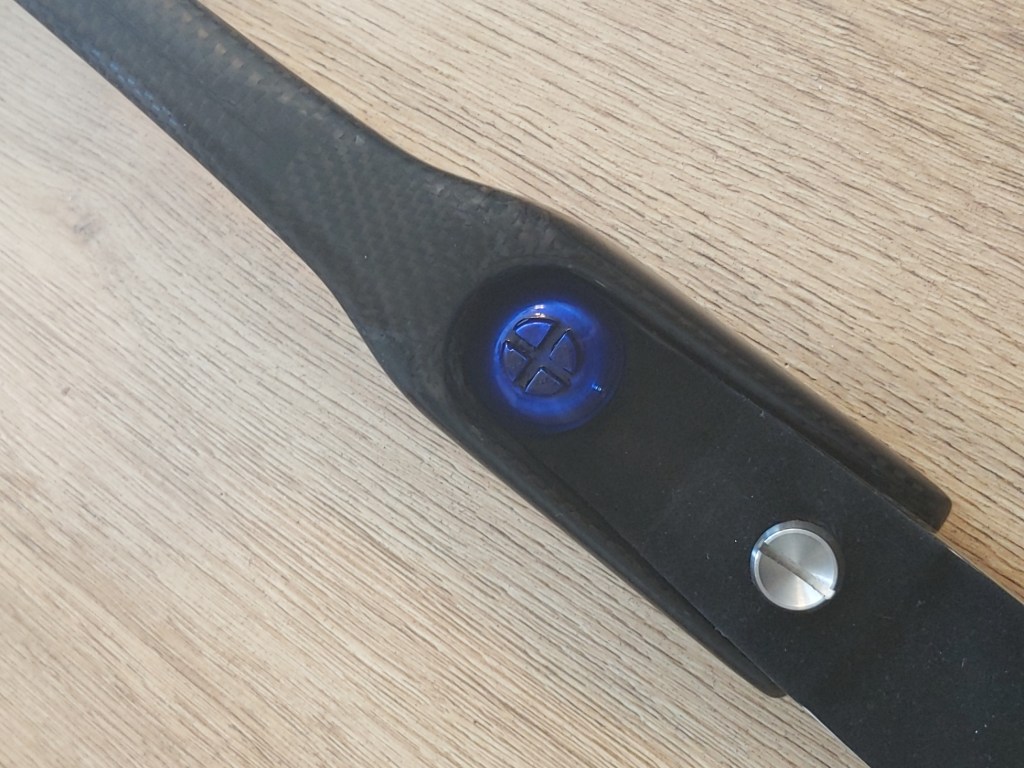
Update: it’s pretty hard wearing and looks the same after two months, though that’s not exactly “long term” yet.

Categories
Uncategorized

Who wins one arrow shootoffs?

If a match is tied after 5 sets for an individual match or 4 sets for a team match, a one arrow shootoff is held. Each archer shoots one arrow, and the highest score wins. If the scores are the same, then the archer or team with the shot closest to the middle of the target wins. As it only happens when two archers or teams have performed almost identically during the match, I was curious to see whether the results of a one arrow shootoff look like a 50:50 chance or whether the winner could be predicted with some level of accuracy based on which archer or team had a higher score during the qualification round, and whether this was different for international or national competitions.

National Competitions in the UK

I used data available on IANSEO to find all individual one arrow shoot-offs in the the female recurve category. The national competitions used were all legs of the National Tour, the British Target Championships, and the UK Masters. There were 19 shoot-offs in 2019, and 29 in 2018. In 2019, the archer with the higher score in the qualification round won the shoot-off 58% of the time, while in 2018 it was 48% of the time. Had I only picked one year to gather data from, it would have looked quite different! Overall, the archer with the higher qualifying score won 52% of the time, with a 90% confidence interval of 40% to 64%.

Roundpercentage won by archer with higher qualification scorenumber of shoot-offsnumber of matches in round
1/32 round63%832
1/16 round45%1116
1/8 round64%118
Quarterfinal60%104
Semifinal25%42
Final25%42

Not all competitions had a 1/32 round, or necessarily even a full 16th round. Overall, it looks like shoot-offs were most common in the later matches. However, the overall numbers are too small to say much about the relative frequencies.

Difference between archer ranks and shoot-off outcome

Difference between rankspercentage win by archer with higher qualification scorenumber of shoot-offsError for 90% confidence interval
1-336%1125%
4-750%12
24%
8-1354%1323%
16-2967%1224%

The larger the difference in qualification round rank between the two archers, the higher the chance of the higher ranked archer winning was. While it looks strange that for the closest-ranked archers, the lower ranked archer won more frequently, it’s a side-effect of there not being many data points – if the result of one match between the closely-ranked archers had flipped, then the probability would have been 45% instead. We can see this in the confidence interval as well. For the shoot-offs where the difference between the ranks was 8-13, I’m 90% confident that if there were an arbitrarily large number of shoot-offs, the percentage win would be between 31% and 77% – quite a wide range and it includes 50%, which is the result we’d get if the match was decided by a coin flip instead.

Conclusions

So overall it looks like the archer who shot the higher qualifying score is slightly more likely to win a one arrow shoot-off, but that it’s still pretty close to a coin flip on average. When there’s a larger difference between the ranks of the two archers, the probability of the archer with the higher qualifying score winning increases – despite the two achers having shot similarly enough during the match to come to a draw.

International competitions

I used the individual female recurve matches from the 2019 World Archery Championships, and all stages of the World Cup in 2019 and 2018. This gave 98 one arrow shoot-offs, of which 47% were won by the archer with the higher qualification score. In 2019, it was 51% and in 2018 it was 41%.

Overall, using a 90% confidence interval for a sample size of 98, the 47% can better be expressed as 38% – 55%. So I’m 90% certain that the true value would fall in that range. I’m 68% sure that the true value is in the range between 42% to 52%. So I really can’t rule out the idea that a shoot-off is equivalent to a coin flip in terms of the result.

For the international competitions, a shoot-off was more likely to happen later on in the competition. This is the same as in the national competitions.

Difference between ranks% win by higher qualification score# shoot-offsError for 90% confidence interval
1-10
38%2616%
11-2556%3015%
26-5047%3414%
51-9338%829%

For each group of ranks, a 50% probability is within the range that I am 90% confident is the “true” probability of winning the shoot-off. In other words, I’m not able to confidently say that the 38% probability in the first row is actually different to a coin flip.

Conclusions

So, overall the result of a one arrow shoot-off is not distinguishable from a coin flip, whether we look at national or international competitions. Further, there isn’t a clear relationship between the difference in rank of the archers, or how late in the competition the shoot-off happens.

I was expecting that there might be a meaningful difference for one of those cases. After all, if two archers with very different ranks are having a shoot-off, maybe the lower ranked (higher scoring) archer is having a bad day if the match is that close, or she feels more pressure as she’s “supposed” to win the match and has more to lose, or some other factor.

However, it doesn’t seem to be the case, at least with this amount of data. This analysis was only looking at individual female recurve matches – it’s entirely possible that there’s a different result for male archers, or teams, or other bowstyles.